Imagine stepping back thousands of years, to a time of pharaohs, colossal temples, and enigmatic pyramids that defy explanation. Ancient Egypt, a land where history breathes through every grain of sand, beckons travelers with its unparalleled grandeur and mystique. From the bustling metropolis of Cairo, home to the last surviving wonder of the ancient world, to the serene, sun-drenched banks of Luxor, often called the world’s greatest open-air museum, this journey offers an immersive dive into one of humanity’s most fascinating civilizations. Prepare to trace the footsteps of legends, unravel ancient secrets, and witness the enduring legacy of a civilization that shaped the course of history. This Cairo to Luxor itinerary is more than a trip; it’s an unforgettable pilgrimage to the heart of antiquity.
Cairo: The Gateway to Antiquity
Your Egyptian adventure begins in Cairo, a city of vibrant contrasts where ancient wonders stand proudly amidst modern life. It’s an exhilarating introduction to Egypt’s rich tapestry, offering a glimpse into both its glorious past and its dynamic present.
The Pyramids of Giza & The Sphinx
No visit to Cairo is complete without standing in awe before the majestic Pyramids of Giza. These monumental structures, built as tombs for pharaohs, have guarded the desert landscape for over 4,500 years. Witness the Great Pyramid of Khufu, the Pyramid of Khafre, and the Pyramid of Menkaure, each a testament to ancient Egyptian engineering prowess. Nearby, the enigmatic Sphinx, with its lion’s body and human head, gazes silently across the sands, a symbol of wisdom and power. Consider a camel ride at sunset for an unforgettable perspective of these iconic landmarks.
The Grand Egyptian Museum (GEM)
While the historic Egyptian Museum in Tahrir Square holds countless treasures, the newly opened Grand Egyptian Museum (GEM) near the Giza Pyramids is set to be the world’s largest archaeological museum. Housing an incredible collection of artifacts, including the complete Tutankhamun collection, it offers a state-of-the-art journey through Egypt’s ancient past. Allow ample time to explore its vast halls and marvel at the artistry and ingenuity of the pharaohs.
Khan el-Khalili Bazaar
For a sensory overload and a taste of local life, immerse yourself in the labyrinthine alleys of Khan el-Khalili Bazaar. This historic market, dating back to the 14th century, is a vibrant hub of activity. Haggle for spices, intricate jewelry, handcrafted souvenirs, and traditional clothing. Don’t forget to stop at El Fishawy, Cairo’s oldest coffee shop, for a cup of mint tea and to soak in the bustling atmosphere.
Coptic Cairo & Islamic Cairo
Delve deeper into Cairo’s diverse history by exploring its Coptic and Islamic quarters. In Coptic Cairo, visit the Hanging Church, the Church of St. Sergius (where the Holy Family is believed to have stayed), and the Ben Ezra Synagogue. Islamic Cairo, a UNESCO World Heritage site, boasts stunning mosques like the Mosque of Ibn Tulun and the Citadel of Salah al-Din, offering panoramic views of the city.
Journeying South: From Cairo to Luxor
Having explored the wonders of Cairo, the next chapter of your adventure takes you south along the lifeblood of Egypt – the Nile River. While domestic flights offer a swift connection, many travelers opt for the classic experience of a Nile cruise, a leisurely and scenic way to bridge the distance between Cairo (or Aswan, if starting there) and Luxor, stopping at various temples along the way.
Luxor: The World’s Greatest Open-Air Museum
Luxor, built on the site of ancient Thebes, the capital of Egypt during its New Kingdom heyday, is an archaeological treasure trove. Divided by the Nile into the East Bank (City of the Living) and the West Bank (City of the Dead), it offers an unparalleled concentration of ancient monuments.
East Bank Wonders: Luxor Temple & Karnak Temple
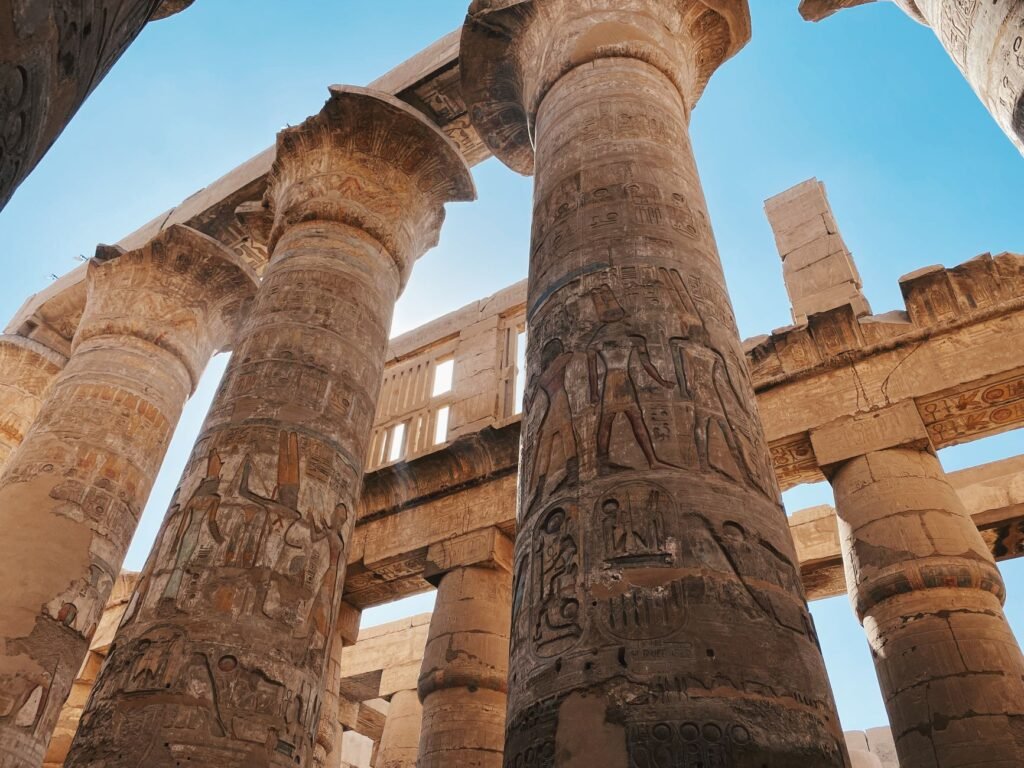
The East Bank of Luxor is home to two of Egypt’s most magnificent temple complexes. Luxor Temple, dedicated to the Theban Triad of Amun, Mut, and Khonsu, is particularly enchanting at night when its illuminated columns and statues cast dramatic shadows. Further north lies Karnak Temple, an astonishing complex of sanctuaries, pylons, and obelisks, representing the accumulated devotion of generations of pharaohs. Wander through the colossal Hypostyle Hall, a forest of 134 towering columns, and feel the weight of history surrounding you.
West Bank Treasures: Valley of the Kings & Hatshepsut’s Temple
Cross the Nile to the West Bank, where the pharaohs and nobles of the New Kingdom chose their eternal resting places. The Valley of the Kings is a barren yet awe-inspiring landscape, hiding over 60 known tombs, including that of Tutankhamun. Descend into a few select tombs to marvel at the remarkably preserved hieroglyphs and vibrant wall paintings depicting the journey to the afterlife. Nearby, the Mortuary Temple of Hatshepsut, Egypt’s most famous female pharaoh, is a stunning example of ancient architecture, carved into the cliffs in