Imagine a land where ancient stones whisper tales of forgotten empires, where colossal trees entwine with magnificent structures, and where every sunrise paints a masterpiece over centuries-old sanctuaries. Welcome to Cambodia, a country that doesn’t just host temples; it embodies them. Temple hopping in Cambodia is more than just a sightseeing tour; it’s a profound journey into the heart of a rich civilization, an architectural marvel, and a spiritual awakening. From the iconic spires of Angkor Wat to the jungle-clad ruins of Ta Prohm, Cambodia offers an unparalleled adventure for history buffs, spiritual seekers, and intrepid explorers alike.
Why Cambodia is the Ultimate Temple Destination
Cambodia’s temples are a testament to the ingenuity and artistic prowess of the Khmer Empire, which flourished between the 9th and 15th centuries. These aren’t just piles of stone; they are intricate cities, elaborate bas-reliefs depicting ancient myths and daily life, and awe-inspiring feats of engineering. The sheer scale and beauty of these sites, particularly within the Angkor Archaeological Park, have earned them UNESCO World Heritage status and a permanent place on every serious traveler’s bucket list. But beyond the grandeur, there’s a tangible sense of peace and wonder that permeates these sacred spaces, inviting you to slow down and truly absorb their timeless magic.
The Grandeur of Angkor: Beyond Angkor Wat
While Angkor Wat is undoubtedly the crown jewel, the Angkor Archaeological Park is a sprawling complex of hundreds of temples, each with its unique charm and story. Dedicate several days to explore this magnificent area around Siem Reap.
Angkor Wat: The Icon
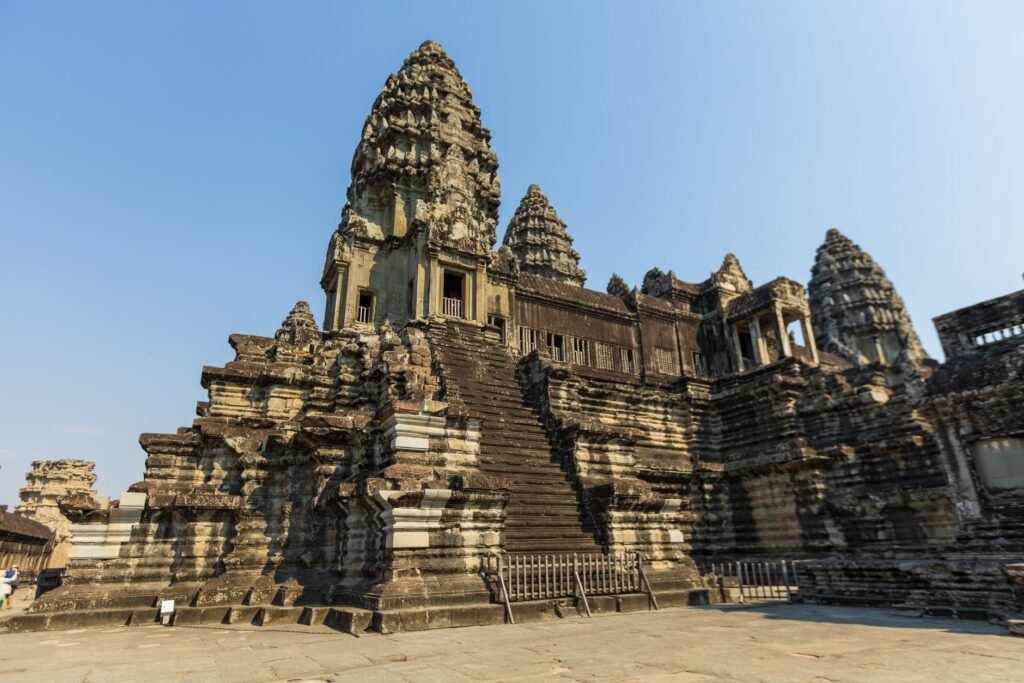
The largest religious monument in the world, Angkor Wat is a masterpiece of Khmer architecture. Its five lotus-like towers are instantly recognizable, especially at dawn when the sky explodes in hues of orange and pink, mirroring in the reflecting pools. Spend time exploring its intricate bas-reliefs, which stretch for hundreds of meters, depicting Hindu mythology and historical events. Don’t rush; allow yourself to be enveloped by its majesty.
Bayon: The Temple of Faces
Located within Angkor Thom, Bayon is famed for its more than 200 colossal smiling faces carved into its 54 Gothic towers. These enigmatic visages, believed to represent Avalokiteshvara (the bodhisattva of compassion) or King Jayavarman VII himself, create an incredibly unique and spiritual atmosphere. Wander through its labyrinthine corridors and feel the watchful gaze of the ancient Khmer kings.
Ta Prohm: The Jungle’s Embrace
Known as the “Tomb Raider temple,” Ta Prohm is deliberately left in much the same condition as it was found: swallowed by the jungle. Gigantic silk-cotton and strangler fig trees have grown through, over, and around the stone structures, their roots resembling giant tentacles. This temple offers an incredibly atmospheric and photogenic experience, where nature and ancient architecture are locked in an eternal embrace.
Banteay Srei: The Citadel of Women
Located a bit further afield (about 25 km northeast of Angkor Thom), Banteay Srei is a smaller, exquisitely carved temple made from distinctive pink sandstone. Its intricate, miniature-like carvings are considered some of the finest examples of classical Khmer art, often depicting celestial dancers (apsaras) and mythological scenes with incredible detail. It’s a testament to the delicate artistry of the Khmer artisans.
Preah Khan & Neak Pean
Don’t miss these equally captivating sites. Preah Khan, a large monastic complex, offers a similar jungle-meets-temple vibe to Ta Prohm but with broader walkways. Neak Pean, a unique island temple, sits in the middle of a large artificial pond, accessible via a picturesque wooden walkway, offering a tranquil contrast to the grander temples.
Venturing Beyond Angkor: Hidden Gems
While Angkor is essential, Cambodia’s temple treasures extend far beyond Siem Reap. For those with more time and a desire for off-the-beaten-path adventures, these sites offer incredible rewards.
Koh Ker: The Forgotten Capital
Once a brief capital of the Khmer Empire in the 10th century, Koh Ker is home to a spectacular seven-tiered pyramid temple, Prasat Thom. Located about 120 km northeast of Siem Reap, it offers a sense of raw, untamed exploration. The temples here are less restored and often feel like true archaeological discoveries, surrounded by dense forest.
Beng Mealea: The Indiana Jones Temple
About 70 km east of Siem Reap, Beng Mealea is a sprawling, largely unrestored temple complex that feels straight out of an adventure movie. Completely overgrown and partially collapsed, you’ll find yourself scrambling over moss-covered stones and through dark corridors, discovering hidden courtyards. It’s an exhilarating experience for the adventurous spirit.
Sambor Prei Kuk: The Pre-Angkorian Legacy
Further south, near Kampong Thom, lies Sambor Prei Kuk, a UNESCO World Heritage site representing the ancient city of Isanapura, the capital of the Chenla Kingdom in the 7th century. These brick towers, older than the Angkor temples, offer a glimpse into the evolution of Khmer architecture and are set amidst a peaceful, forested landscape.
Practical Tips for Your Temple Hopping Adventure
-
Best Time to Visit:
The dry season (November to February) offers pleasant temperatures and lower humidity, making it ideal for exploring. March to May is very hot, and June to October is the rainy season, which brings lush greenery but also higher humidity and occasional downpours.
-
Getting Around:
In Siem Reap, tuk-tuks are the most popular and convenient way to navigate the Angkor complex. You can hire a driver for a full day or multiple days. Bicycles are great for exploring smaller circuits, and private cars with drivers offer comfort for longer distances to outer temples.
-
What to Wear:
Modest clothing is required for temple visits – shoulders and knees must be