Embark on a journey through the sands of time, where ancient mysteries whisper from colossal monuments and the legacy of pharaohs feels palpable. Exploring Ancient Egypt, from the bustling metropolis of Cairo to the awe-inspiring grandeur of Luxor, is more than just a trip; it’s an immersive dive into one of humanity’s most fascinating civilizations. Prepare to be captivated by a land where every stone tells a story, and the majestic Nile River has borne witness to millennia of history. This epic adventure promises to leave you spellbound, connecting you directly to the wonders of a bygone era.
Cairo: Gateway to the Pharaohs
Your Egyptian odyssey typically begins in Cairo, the vibrant capital that perfectly blends ancient heritage with modern life. This sprawling city is your essential starting point for delving into the country’s most iconic treasures.
The Pyramids of Giza & Sphinx
No visit to Egypt is complete without standing in awe before the Great Pyramids of Giza and their enigmatic guardian, the Sphinx. These monumental structures, built as tombs for pharaohs Khufu, Khafre, and Menkaure, are the last remaining wonders of the ancient world. Their sheer scale and precision engineering continue to baffle and inspire, offering a profound sense of humanity’s enduring quest for immortality. Arrive early in the morning to beat the heat and the crowds, allowing you to truly soak in the atmosphere. Consider a camel ride for a classic photo opportunity, but always negotiate the price beforehand.
Egyptian Museum & Khan el-Khalili Bazaar
Dive deeper into ancient history at the Egyptian Museum, home to an unparalleled collection of artifacts, including the glittering treasures of Tutankhamun. From golden masks to sarcophagi, mummies, and intricate jewelry, the museum provides invaluable context to the sites you’ll visit. Take your time to explore, as there are thousands of years of history within its walls. Afterwards, immerse yourself in the sensory overload of Khan el-Khalili Bazaar. This historic market, dating back to the 14th century, is a labyrinth of stalls selling everything from spices and perfumes to intricate jewelry, leather goods, and souvenirs. It’s the perfect place to practice your bargaining skills and soak up the local culture over a cup of mint tea.
Journeying South: From Cairo to Luxor
Once you’ve absorbed Cairo’s wonders, it’s time to head south to Luxor, the heart of ancient Thebes. The most common and efficient way to travel between these two major hubs is by domestic flight, a quick hour-long hop. Alternatively, overnight sleeper trains offer a more atmospheric, albeit longer, journey. For those seeking a truly iconic experience, a multi-day Nile River cruise often links Luxor and Aswan, offering a leisurely way to see temples along the riverbanks, though this typically starts or ends in Luxor.
Luxor: The World’s Greatest Open-Air Museum
Luxor is often called the “world’s greatest open-air museum,” and for good reason. Divided by the Nile into the East Bank (the city of the living) and the West Bank (the city of the dead), it offers an astonishing concentration of ancient sites.
East Bank Wonders: Luxor & Karnak Temples
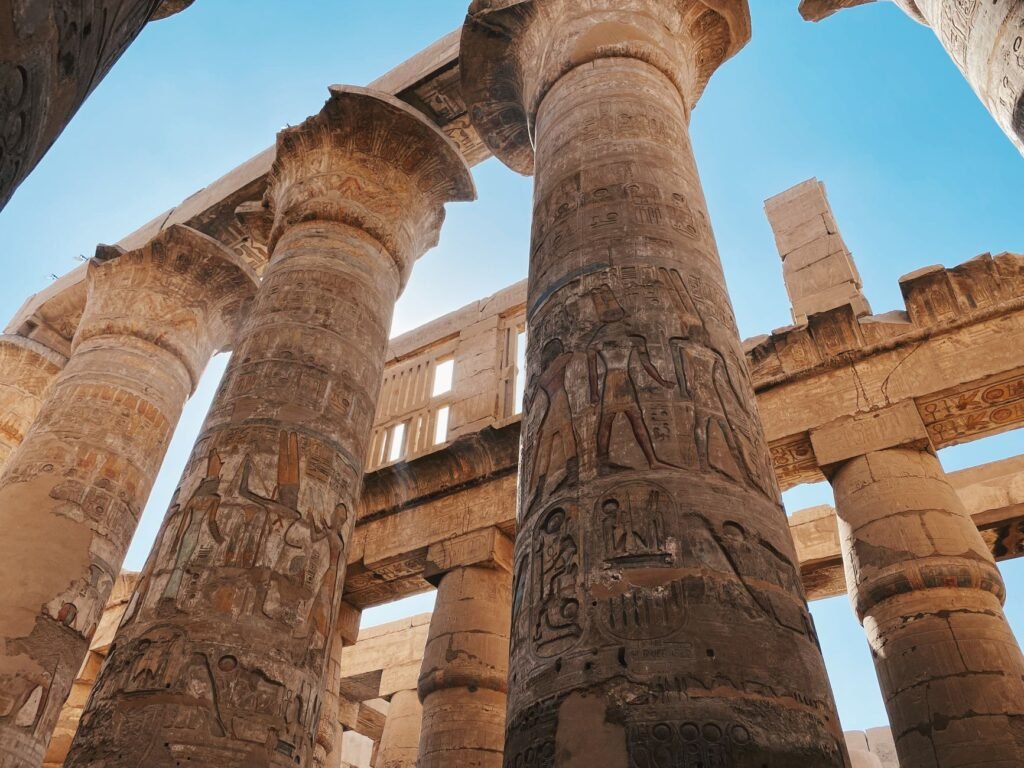
On the East Bank, the Luxor Temple and Karnak Temple Complex stand as testaments to the power and devotion of ancient pharaohs. Luxor Temple, particularly stunning at sunset when its illuminated columns cast dramatic shadows, was dedicated to the Theban Triad of Amun, Mut, and Khonsu. A grand avenue of sphinxes once connected it to the even more colossal Karnak Temple. Karnak is not just a temple; it’s a vast complex of temples, chapels, pylons, and other buildings, built over centuries. Walking through its hypostyle hall, with its 134 massive columns, is an utterly breathtaking experience that makes you feel tiny amidst such monumental human achievement.
West Bank Treasures: Valley of the Kings & Hatshepsut’s Temple
Cross the Nile to the West Bank, and you enter the realm of the afterlife. The Valley of the Kings is the famous burial ground of pharaohs and powerful nobles of the New Kingdom. Here, you can descend into elaborately decorated tombs, marveling at the vibrant hieroglyphs and paintings that depict the journey to the afterlife. While Tutankhamun’s tomb is a highlight, many others offer equally stunning artistry. Nearby, the Mortuary Temple of Hatshepsut, carved into the cliff face, stands as a unique architectural masterpiece dedicated to one of Egypt’s most powerful female pharaohs. Don’t miss the Colossi of Memnon, two massive stone statues of Pharaoh Amenhotep III, which greet you upon entering the West Bank.
Practical Tips for Your Egyptian Adventure
To ensure your trip is as smooth and enjoyable as possible, keep these practical tips in mind:
-
Best Time to Visit
The ideal time to visit Egypt is during the cooler months, from October to April. Temperatures are pleasant, making sightseeing much more comfortable. Avoid the scorching summer months (June-August) when temperatures can soar above 40°