Imagine a place where the earth itself breathes warmth, where mineral-rich waters bubble up from deep below, offering solace, healing, and breathtaking beauty. Hot springs are more than just natural pools; they are ancient wonders, geological marvels, and sanctuaries for the body and soul. From steamy volcanic landscapes to serene mountain retreats, these geothermal havens invite travelers to unwind, rejuvenate, and connect with nature in the most profound way. If you’re dreaming of a soak that transcends the ordinary, join us on a global journey to discover the best hot springs the world has to offer.
The Irresistible Allure of Geothermal Wonders
What is it about hot springs that captivates us? Beyond their undeniable beauty, these natural thermal baths are celebrated for their therapeutic properties. Rich in minerals like sulfur, magnesium, and calcium, the waters are believed to soothe aching muscles, improve circulation, and even alleviate skin conditions. But it’s not just the physical benefits; there’s a unique tranquility that comes with soaking in nature’s embrace, often surrounded by stunning landscapes, making them perfect escapes for relaxation and introspection.
A World Tour of Enchanting Hot Springs
Blue Lagoon, Iceland
Perhaps the most iconic hot spring in the world, Iceland’s Blue Lagoon is a geothermal spa renowned for its milky-blue waters, rich in silica and sulfur. Set amidst a stark, volcanic landscape, the lagoon offers a surreal bathing experience, especially under the glow of the Northern Lights or the midnight sun. The water temperature hovers around 37-40°C (98-104°F), providing a perfect contrast to Iceland’s often chilly air.
- Practical Tips: Book tickets well in advance, as it’s incredibly popular. Don’t forget to condition your hair before entering the water to protect it from the silica.
- Best Time to Visit: Year-round, but evenings offer a magical atmosphere, especially if you’re hoping to catch the aurora borealis during winter months (September-April).
- Local Insight: Locals also frequent lesser-known, more rustic hot pots and natural springs dotted across the country for a more authentic, less commercial experience.
Pamukkale, Turkey
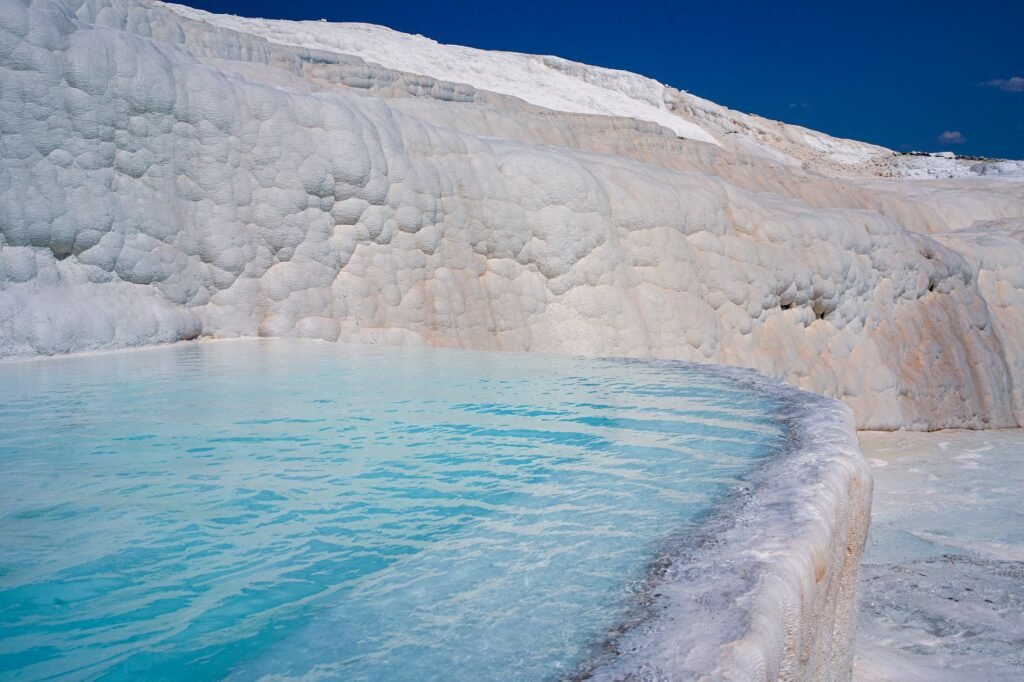
Meaning “cotton castle” in Turkish, Pamukkale is a UNESCO World Heritage site famous for its dazzling white travertine terraces cascading down a hillside. These terraces are formed by mineral-rich thermal waters that have flowed for millennia, creating a breathtaking spectacle. Above the terraces lie the ruins of the ancient Roman city of Hierapolis, where visitors can bathe in the antique pool amidst submerged Roman columns.
- Practical Tips: You’ll need to remove your shoes to walk on the travertine terraces to preserve them. Wear swimwear if you plan to enter the pools.
- Best Time to Visit: Spring (April-May) and Autumn (September-October) offer pleasant temperatures for exploring without the intense summer heat or winter chill.
- Local Insight: Combine your visit with the nearby Hierapolis archaeological site for a full day of history and natural wonder.
Széchenyi Thermal Bath, Hungary
Nestled in Budapest’s City Park, Széchenyi is one of Europe’s largest and most magnificent thermal bath complexes. With 18 pools, including three grand outdoor pools, it’s a vibrant social hub where locals play chess in the steaming waters, friends gather, and tourists marvel at the neo-baroque architecture. The thermal waters are rich in calcium, magnesium, and hydrogen-carbonate, known for their healing properties.
- Practical Tips: Rent a locker or cabin for your belongings. Consider visiting early in the morning for a quieter experience or later in the evening for a lively atmosphere.
- Best Time to Visit: Winter is particularly atmospheric, as the steam rises dramatically from the outdoor pools into the crisp air.
- Local Insight: Don’t miss the occasional “Sparty” (spa party) held in the evenings during summer, featuring music and light shows.
Jigokudani Monkey Park, Japan
While not for human bathing, Jigokudani (Hell Valley) in Japan offers a truly unique hot spring experience: watching wild Japanese macaques, or “snow monkeys,” relax in their own natural hot springs. Located in the snowy mountains of Nagano Prefecture, this park provides an incredible opportunity to observe these fascinating creatures up close, especially during winter when they huddle together in the warm waters.
- Practical Tips: Wear sturdy, waterproof shoes for the walk to the park. Maintain a respectful distance from the monkeys.
- Best Time to Visit: Winter (December-March) is ideal for seeing the monkeys covered in snow, creating iconic photo opportunities.
- Local Insight: After observing the monkeys, humans can enjoy nearby onsen (traditional Japanese hot springs) in the Yamanouchi area.
Huanglong Valley, China
A UNESCO World Heritage site in Sichuan, Huanglong Valley is a stunning landscape of colorful travertine pools, waterfalls, and forests. The mineral deposits create a dazzling array of blues, greens, and yellows in the terraced pools, resembling a mythical dragon winding through the mountains. While primarily a sightseeing destination rather than a bathing one, the sheer beauty of these natural formations is breathtaking.
- Practical Tips: The altitude is high (up to 3,578 meters), so take it easy and consider bringing altitude sickness medication if you’re prone to it.
- Best Time to Visit: Late spring to early autumn (May-October) for the best weather and vibrant water colors.
- Local Insight: Combine your visit with the nearby Jiuzhaigou Valley for an unparalleled immersion in natural beauty.