Imagine a world where empires connected, ideas intertwined, and exotic goods traveled thousands of miles across unforgiving deserts and towering mountains. This was the Silk Road – not a single path, but a vast network of ancient trade routes that once pulsed with the rhythm of camel caravans, carrying treasures from East to West and back again. More than just a conduit for silk and spices, it was a superhighway of culture, religion, art, and innovation, shaping civilizations from China to the Mediterranean.
Today, the spirit of the Silk Road endures, inviting modern adventurers to retrace the footsteps of merchants, monks, and explorers. Embarking on a journey along these legendary routes is to step back in time, to witness architectural marvels that defy centuries, to savor flavors that tell stories of distant lands, and to connect with cultures whose hospitality is as warm as the desert sun. If you’re yearning for an adventure that combines rich history with breathtaking landscapes and profound cultural immersion, exploring the Silk Road is an unparalleled experience.
What Was the Silk Road? A Tapestry of History
The Silk Road truly began to flourish around 200 BCE, connecting the Han Dynasty of China with the Roman Empire. Its name, coined in the 19th century, highlights the most prized commodity exchanged: silk, a closely guarded secret of the Chinese. But the routes facilitated much more than just textiles. Spices, precious stones, gold, silver, glass, and even paper, gunpowder, and printing techniques traveled along these paths. Crucially, it was also a conduit for ideas – Buddhism, Islam, and Christianity spread across continents, leaving an indelible mark on the regions they touched. The Silk Road was a dynamic, ever-evolving entity, a testament to human ingenuity and the enduring desire for connection and discovery.
Key Destinations Along the Silk Road: Where History Comes Alive
While the Silk Road spanned thousands of miles and countless regions, certain destinations stand out as essential stops for any modern traveler seeking to capture its essence. These places are living museums, vibrant with the echoes of their storied past.
Central Asia’s Gems: Uzbekistan, Kazakhstan & Kyrgyzstan
- Uzbekistan: The Heart of the Silk Road
Uzbekistan is arguably the most captivating destination for Silk Road enthusiasts. Cities like Samarkand, with its awe-inspiring Registan Square, a masterpiece of Islamic architecture, will leave you breathless. Bukhara, a UNESCO World Heritage site, feels like stepping straight into an ancient tale with its labyrinthine alleys, historic mosques, and bustling bazaars. And then there’s Khiva, a perfectly preserved walled city, an oasis in the desert that truly transports you to another era. - Kazakhstan: The Land of Steppes and Modernity
While often overlooked, Kazakhstan offers a fascinating contrast. Its former capital, Almaty, nestled at the foot of the Tian Shan mountains, is a modern city with a vibrant arts scene and stunning natural beauty just a short drive away. It served as a vital hub where caravans rested before tackling the next leg of their journey. - Kyrgyzstan: Nomadic Traditions Endure
For those seeking adventure and a glimpse into nomadic culture, Kyrgyzstan is a must. Explore the stunning landscapes around Lake Issyk-Kul, stay in a traditional yurt, and experience the unparalleled hospitality of the Kyrgyz people. Its rugged mountains and high-altitude passes were challenging but essential sections of the ancient trade routes.
China’s Western Frontier: Where the Journey Began (or Ended)
- Xi’an: The Eastern Terminus
The ancient capital of China, Xi’an, is widely considered the eastern starting (or ending) point of the Silk Road. Here, you can marvel at the world-famous Terracotta Army, a silent guardian of Emperor Qin Shi Huang’s tomb, and walk atop the remarkably preserved city walls. The city’s Muslim Quarter offers a sensory overload of delicious food and bustling markets, a living legacy of the Silk Road’s cultural exchange. - Dunhuang: Gateway to the Buddhist World
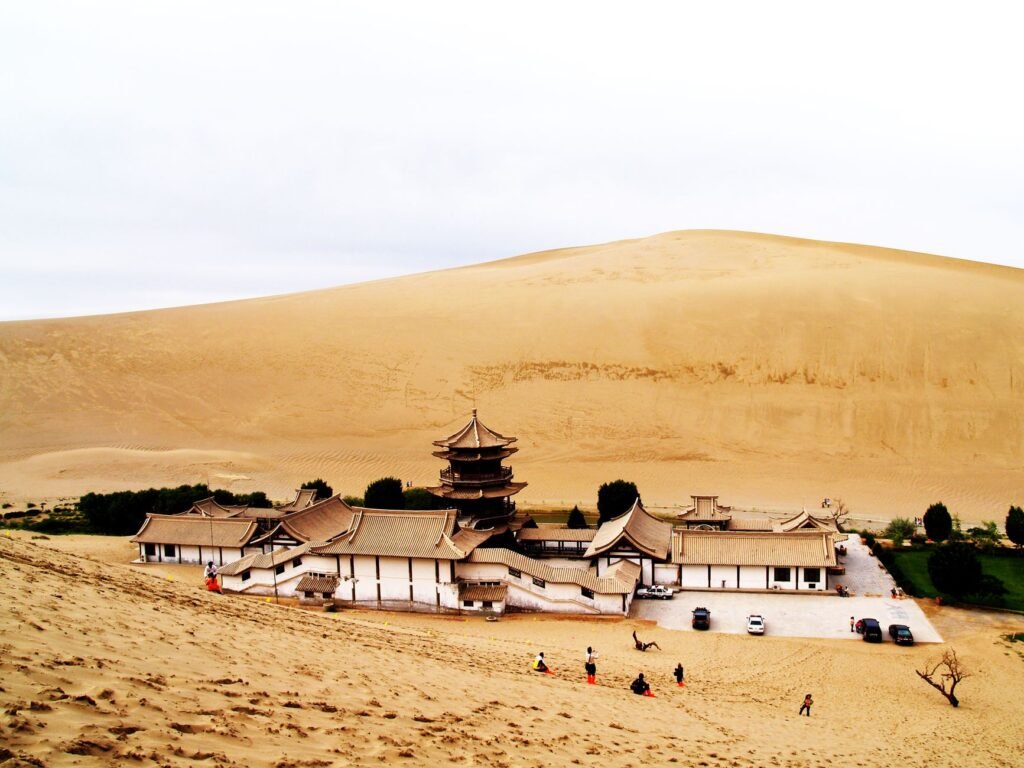
Deep in the Gobi Desert, Dunhuang was a crucial oasis town and a center for Buddhist art. The