Imagine stepping into a realm where ancient stones whisper tales of forgotten empires, colossal tree roots entwine with magnificent structures, and the very air hums with centuries of history. This isn’t a fantasy; it’s the captivating reality of temple hopping in Cambodia. A journey through this Southeast Asian gem is an unparalleled adventure, inviting you to explore the heart of the Khmer Empire and witness some of humanity’s most breathtaking architectural achievements.
Cambodia’s temples, particularly those clustered around Siem Reap, are more than just old buildings; they are living testaments to human ingenuity, spiritual devotion, and the enduring power of nature. From the iconic spires of Angkor Wat piercing the dawn sky to the enigmatic faces of Bayon, each site offers a unique window into a glorious past. Prepare to be awestruck, inspired, and utterly enchanted as we guide you through the ultimate temple-hopping experience in Cambodia.
Why Cambodia is the Ultimate Temple Destination
Cambodia’s allure for temple enthusiasts lies in its sheer scale, intricate artistry, and the profound spiritual atmosphere that permeates these ancient sites. The Angkor Archaeological Park, a UNESCO World Heritage site, is the jewel in Cambodia’s crown, boasting hundreds of temples, reservoirs, and communication routes. These structures, built between the 9th and 15th centuries, showcase the sophisticated engineering, advanced hydrology, and distinctive artistic style of the Khmer Empire. It’s a place where history isn’t just observed; it’s felt in every moss-covered stone and every intricate bas-relief.
The Grand Tour: Iconic Temples You Can’t Miss
Angkor Wat: The Crown Jewel
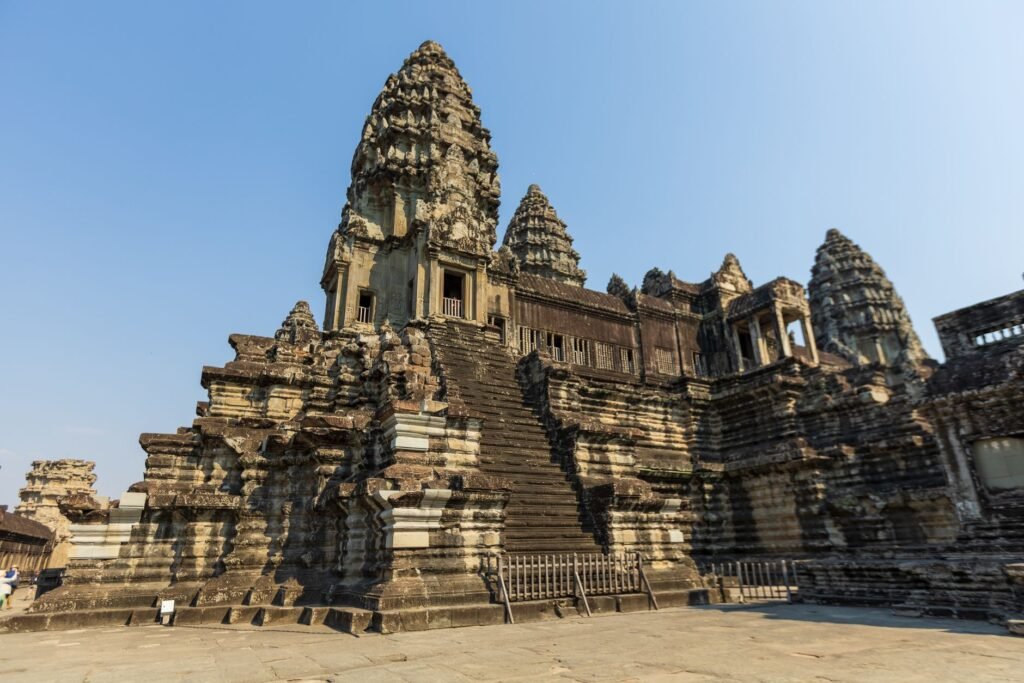
No journey to Cambodia is complete without witnessing the majesty of Angkor Wat. This colossal temple complex is the largest religious monument in the world and a masterpiece of Khmer architecture. Dedicated to the Hindu god Vishnu, its five lotus-bud towers are instantly recognizable and form the centerpiece of Cambodia’s flag. The ultimate experience here is watching the sunrise over its reflective pools, painting the sky in hues of orange and purple as the temple slowly emerges from the darkness. Spend hours exploring its intricate bas-reliefs depicting Hindu myths and historical battles, and feel the weight of history in its grand courtyards.
Angkor Thom & Bayon: Faces of the Khmer Empire
Just north of Angkor Wat lies Angkor Thom, a fortified city that served as the last capital of the Khmer Empire. Within its mighty walls, you’ll discover several magnificent temples, with Bayon being the most famous. Bayon stands apart with its enigmatic, smiling faces carved into dozens of towers, each one seemingly observing you with a serene gaze. These 200+ colossal faces are believed to represent Avalokiteshvara, the bodhisattva of compassion, or perhaps King Jayavarman VII himself. Exploring Bayon feels like wandering through a maze of ancient smiles, a truly unique and mystical experience.
Ta Prohm: The Jungle’s Embrace
Prepare to be transported to another world at Ta Prohm, famously known as the “Tomb Raider temple.” Unlike many other temples in the park, Ta Prohm has been largely left to the mercy of the jungle, with giant strangler fig and silk-cotton trees growing directly out of its stone foundations. Their colossal roots, like giant tentacles, grip the temple walls, creating a stunning and dramatic interplay between nature and ancient architecture. It’s a photographer’s dream and an adventurer’s delight, offering a palpable sense of discovery and mystery.
Beyond the Big Three: Lesser-Known Wonders Worth Exploring
While Angkor Wat, Bayon, and Ta Prohm are essential, venturing further afield reveals equally captivating, yet often less crowded, gems.
Banteay Srei: The Citadel of Women
Located about 35 km northeast of Siem Reap, Banteay Srei is a jewel-box temple renowned for its exquisite, miniature-scale carvings. Built primarily from distinctive pink sandstone, its delicate and incredibly detailed bas-reliefs are considered some of the finest examples of Khmer art. The name translates to “Citadel of Women,” possibly due to the intricate carvings depicting female deities or the belief that such delicate work could only have been done by women. It’s a testament to the artisans’ skill and a must-see for those who appreciate fine detail.
Preah Khan: The Temple of the Sacred Sword
Preah Khan, meaning “Sacred Sword,” is another sprawling complex that, like Ta Prohm, has been partially reclaimed by the jungle. It served as a Buddhist monastery and university, and its labyrinthine corridors, numerous courtyards, and impressive gateways offer a sense of grand scale and exploration. Look out for the unique two-story building (a rare sight in Khmer architecture) and the impressive garudas clutching nagas at the entrances. It’s a fantastic spot for those seeking a more immersive and less crowded experience.
Beng Mealea: The Ruined Temple
For the true adventurer, Beng Mealea offers an experience unlike any other. About 60 km east of Siem Reap, this largely unrestored temple lies in a glorious state of ruin, completely engulfed by the jungle. Visitors can clamber over piles of collapsed stones, navigate through dark corridors, and marvel at trees growing through the very heart of the temple. It feels like a true expedition into a lost world, offering a raw and visceral connection to the past. While requiring a bit more travel, the reward is an unforgettable, Indiana Jones-esque adventure.
Practical Tips for Your Cambodian Temple Adventure
- Best Time to Visit: The dry season (November to February) offers pleasant temperatures and lower humidity. The shoulder seasons (March-May and October) can be hotter but offer fewer crowds. Avoid the peak rainy season (June-September) if possible, though the temples are lush and beautiful during this time.
- Getting Around: Tuk-tuks are the most popular and convenient way to explore the Angkor complex. You can hire one for a day or multiple days. Bicycles are great for shorter distances or if you prefer a more active approach. Private