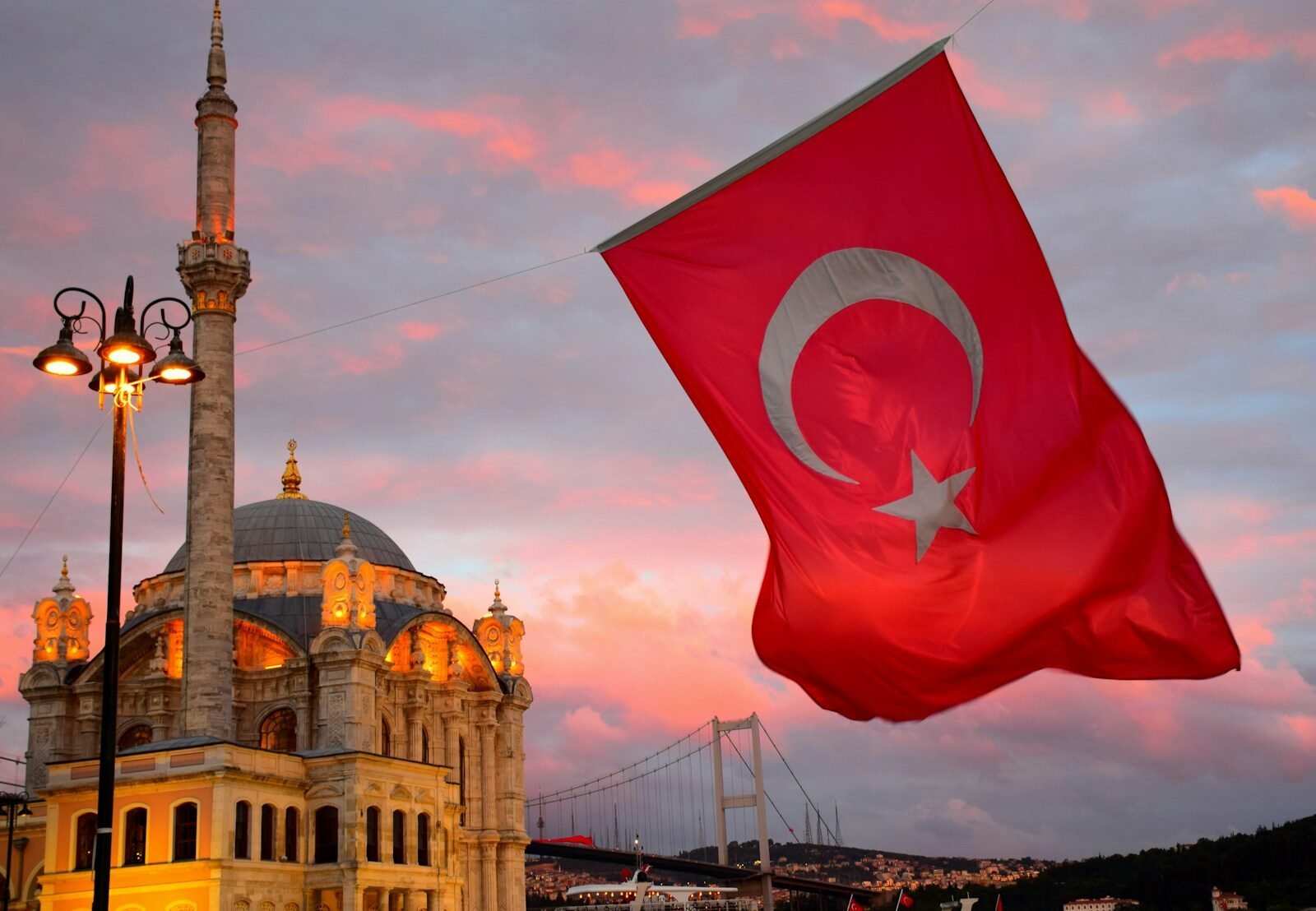
Bottom Line Up Front: Yes — for the vast majority of destinations, Türkiye is a safe and rewarding destination for American travelers. Istanbul, Cappadocia, and the Aegean and Mediterranean coasts attract millions of Western visitors annually without serious incident. However, a hard geographic line exists: southeastern provinces bordering Syria and Iraq carry a Level 4 “Do Not Travel” designation. Know the line, prepare like a professional, and you’ll find one of the world’s most spectacular travel experiences waiting for you.
Current Official Safety Assessment
U.S. State Department Advisory: Level 2 — Exercise Increased Caution
The U.S. Department of State currently rates Türkiye overall at Level 2, the same tier applied to widely visited destinations such as France, Italy, Spain, and Germany. This does not mean danger — it means informed awareness. The advisory cites terrorism, civil unrest, and arbitrary law enforcement as the primary concerns, risks that exist in virtually every major tourism economy on Earth.
What Level 2 actually means in practice:
- American tourists visit Türkiye in the hundreds of thousands each year without incident
- The advisory does not recommend avoiding the country
- It recommends situational awareness, avoiding large political demonstrations, and monitoring credible news sources
The Critical Exception: Level 4 Southeastern Border Provinces
A carved-out Level 4 “Do Not Travel“ designation applies specifically to provinces along the Syrian and Iraqi borders, including Hatay, Gaziantep (border zones), Şırnak, Hakkari, and Şanlıurfa’s outer districts. This is not a blanket warning for the country — it is a precise geographic boundary.
The distinction matters enormously. Istanbul is roughly 1,100 miles from the Syrian border — a distance comparable to London to Warsaw.
What Other Governments Say
Triangulating advisories from allied governments gives a fuller picture than relying on a single source.
| Government Body | Advisory Level | Key Language |
|---|---|---|
| U.S. State Department | Level 2 — Exercise Increased Caution | Terrorism and civil unrest cited; border regions Level 4 |
| UK Foreign, Commonwealth & Development Office (FCDO) | Advise against all but essential travel to border regions | Western Türkiye described as broadly safe for tourism |
| Australia Smartraveller | Exercise a high degree of caution (overall) | Advise against travel to Syrian/Iraqi border areas |
| Canada Travel.gc.ca | Exercise a high degree of caution | Consistent with U.S./UK on border exclusion zones |
The consensus is clear: Major tourism corridors — Istanbul, the Aegean coast, Cappadocia, Ankara — receive no specific warning from any allied government. The southeastern border zone is universally flagged.
Geopolitical and Regional Context
Why the Southeast Is Dangerous
The provinces bordering Syria and Iraq sit at the intersection of several active conflict dynamics:
- Ongoing PKK (Kurdistan Workers’ Party) insurgency activity in rural southeastern terrain, including IED incidents on secondary roads
- Cross-border spillover from the Syrian civil war’s lingering instability in Idlib and northern Syria
- Turkish military operations (Operation Claw series) in northern Iraq, creating fluid security zones
- ISIS/Daesh remnant cells remain an acknowledged threat, primarily in the border corridor
These are not theoretical risks. They are documented, active conditions that make independent travel in these zones genuinely dangerous.
The Adana Consulate Suspension
The U.S. Consulate in Adana — the regional consular post closest to the Syrian border — has suspended non-emergency American citizen services due to security concerns. This has significant practical implications:
- Americans who encounter emergencies (lost passport, arrest, medical crisis) in the southeastern region cannot rely on nearby consular support
- The nearest full-service embassy is in Ankara, with a consulate also operating in Istanbul
- This suspension is itself a signal: even U.S. government personnel assess the southeastern corridor as elevated-risk
Major Transit Corridors Remain Open and Safe
For the traveler whose itinerary does not touch the southeast, this geopolitical context is essentially background noise. The following remain fully operational and unaffected:
- Istanbul Atatürk / Istanbul Airport (IST) — one of the world’s busiest airports, with extensive U.S. and European connections
- Ankara Esenboğa Airport (ESB) — the capital’s international hub
- Antalya Airport (AYT) — primary gateway for Mediterranean resort travel
- İzmir Adnan Menderes Airport (ADB) — Aegean coast hub
Regional Safety Breakdown Matrix
Use this table to quickly assess any destination on your itinerary.
| Region / Destination | Safety Status | Advisory Level | Key Considerations for Tourists |
|---|---|---|---|
| Istanbul | ✅ Safe for Tourism | Level 2 (national) | Petty theft in Sultanahmet and Grand Bazaar; tourist scams; standard big-city awareness applies |
| Cappadocia (Göreme, Ürgüp) | ✅ Safe for Tourism | Level 2 (national) | Extremely low crime; remote terrain requires care in balloon/hiking activities; reputable operators only |
| Antalya & Turkish Riviera | ✅ Safe for Tourism | Level 2 (national) | Major resort infrastructure; well-policed tourist zones; occasional petty theft in markets |
| Bodrum & Aegean Coast | ✅ Safe for Tourism | Level 2 (national) | High-end tourism corridor; strong expat/EU tourist presence; safe for solo travelers |
| İzmir | ✅ Safe for Tourism | Level 2 (national) | Cosmopolitan, progressive city; lower crime profile than Istanbul; excellent base for Ephesus day trips |
| Ankara | ✅ Safe for Tourism | Level 2 (national) | Capital city security infrastructure; primary tourist sites well-monitored; less tourist-targeted crime |
| Pamukkale / Hierapolis | ✅ Safe for Tourism | Level 2 (national) | Rural access roads; book transport through hotels; no specific security concern |
| Trabzon & Black Sea Coast | ⚠️ Exercise Caution | Level 2 (national) | Less tourist infrastructure; language barrier greater; monitor local news |
| Gaziantep (city) | ⚠️ Exercise Caution | Elevated — near Level 4 zone | Historically significant city; proximity to Syrian border warrants caution; avoid rural outskirts |
| Hatay Province | 🚫 Do Not Travel | Level 4 | Active conflict spillover risk; consular support unavailable; no tourism justification |
| Şırnak / Hakkari Provinces | 🚫 Do Not Travel | Level 4 | Active PKK insurgency zones; IED risk on secondary roads; military operations ongoing |
| Şanlıurfa (border areas) | 🚫 Do Not Travel | Level 4 | City itself has reduced risk, but border district travel is prohibited |
Terrorism Risk: Honest Assessment
Terrorism is the most-cited concern in the State Department advisory and deserves a frank, data-informed treatment.
Historical context: Türkiye experienced a series of significant terrorist attacks between 2015–2017, including strikes in Istanbul’s Sultanahmet district and Atatürk Airport. The security apparatus has since been substantially strengthened.
Current reality:
- Turkish National Police and intelligence services maintain an aggressive counter-terrorism posture
- Major tourist sites now feature metal detectors, bag checks, and visible security personnel
- The most recent significant attacks have been concentrated in border regions, not tourism corridors
- Istanbul’s Istiklal Avenue experienced an incident in November 2022 — a reminder that risk is nonzero, but the response was swift and the area returned to normal within days
The honest comparison: The risk of a terrorism-adjacent incident in Istanbul is statistically comparable to that of Paris, Brussels, or London — cities that see no reduction in American tourism volume.
Everyday Scams and Safety Nuances
These are the risks that actually affect the average American tourist in Türkiye — not headline terrorism, but the grinding, wallet-targeting schemes that have victimized thousands.
1. The Overpriced Café / “New Friend” Scheme
How it works: A friendly local — often near Taksim Square or Sultanahmet — strikes up conversation, builds rapport, then steers you to a bar or café where a bill of $200–$500 (or more) arrives for drinks. Enforcement is sometimes intimidating.
Defense: Never let a new acquaintance choose the venue. Research cafés independently. If steered, excuse yourself and leave before ordering.
2. Taxi Meter Scams
How it works: Drivers “forget” to start the meter, use a nighttime rate during the day, or take extended routes especially from airports.
Defense:
- Use BiTaksi or iTaksi apps, which lock in the fare and route digitally
- Alternatively, negotiate price upfront
- Rideshares (Uber operates in Istanbul) provide full price transparency
3. Fake Currency Change
How it works: Especially at informal exchange booths, counterfeit Turkish lira notes or sleight-of-hand shortchanging is reported by tourists.
Defense: Exchange currency at bank ATMs (PTT, Garanti, İş Bankası) or official exchange houses (döviz bürosu). Count change immediately, in view of the clerk.
4. Grand Bazaar Aggressive Upselling
How it works: Vendors physically guide tourists into shops, use high-pressure tactics, and quote prices 5–10x the negotiation baseline.
Defense: This is cultural commerce, not crime — but know that the first price quoted is theatrical. Walking away is always permitted. Never feel obligated. Keep hands in pockets near bag-snatching risk areas.
5. Carpet Shop “Tea and Talk” Commitment Trap
How it works: You’re invited for tea (genuinely hospitable Turkish custom), then subject to hours of carpet sales pressure, sometimes with guilt-tripping if you don’t buy.
Defense: Accept tea only if you’re genuinely interested in browsing. Say “just looking” in Turkish — sadece bakıyorum — early and often.
6. Shoe Shine Drop
How it works: A shoe shiner “accidentally” drops his brush near you. If you return it, he offers a free shine — then demands payment.
Defense: Politely ignore the dropped brush. This is a widely documented Istanbul scam targeting tourists in the Eminönü area.
Solo Female Traveler Safety
Türkiye is broadly safe for solo female travelers in major tourist destinations, with appropriate precautions. Millions of women travel independently through Istanbul, Cappadocia, and the coasts annually.
Realistic considerations:
- Verbal harassment (catcalling, persistent attention) is more common than in Western Europe, particularly in tourist-heavy areas and less affluent neighborhoods
- Dress code: Conservative dress (covering shoulders and knees) is culturally respectful in mosques and significantly reduces unwanted attention in non-resort areas. Coastal resorts and Istanbul’s Beyoğlu district are notably relaxed
- Nighttime navigation: Stick to well-lit, populated streets. Use apps rather than hailing unmarked taxis after dark
- Accommodation: Vetted hotels and reputable hostels in central neighborhoods (Sultanahmet, Beyoğlu, Kadıköy) have strong safety records
- Emergency contacts: Save the Turkish emergency number (155 for Police, 112 for general emergency) in your phone before arrival
The realistic baseline: A solo female traveler exercising standard urban awareness will experience Türkiye as inconvenient in terms of attention, not dangerous. Cappadocia and coastal resorts are particularly reported as comfortable and welcoming environments.
Health and Medical Considerations
- Medical infrastructure in Istanbul and Ankara is excellent; private hospitals (Acıbadem, Memorial Health Group) meet European standards and regularly treat international patients
- Travel health insurance is non-negotiable — American insurance typically does not cover international care
- No required vaccinations for entry, but the CDC recommends standard travel vaccines (hepatitis A/B, typhoid, routine updates)
- Water: Tap water is technically treated but not recommended for drinking in most cities. Bottled water is cheap and universally available
- Pharmacies: Eczane pharmacies are widespread; many pharmacists speak basic English and can advise on common ailments without a prescription
Actionable Preparation Steps for American Travelers
Complete these steps before departure — not at the airport.
1. Enroll in STEP (Smart Traveler Enrollment Program)
Register your trip at step.state.gov. This notifies the U.S. Embassy of your presence in-country, enables emergency alerts to reach you directly, and facilitates evacuation assistance if a crisis develops. It takes under 10 minutes and is free.
2. Purchase Comprehensive Travel Insurance
Standard trip cancellation insurance is insufficient. Ensure your policy explicitly covers:
- Emergency medical evacuation (minimum $100,000 coverage recommended)
- Hospitalization and medical treatment abroad
- Trip interruption due to civil unrest or government advisory changes
- 24/7 emergency assistance hotline
Providers worth comparing: Allianz Travel, World Nomads, IMG Global, GeoBlue.
3. Verify Your Passport Validity
Türkiye requires your passport to be valid for at least six months beyond your entry date. Many travelers are denied boarding or entry with passports expiring within this window. Check before you book, not before you fly.
4. Save Embassy and Emergency Contacts Offline
- U.S. Embassy Ankara: +90 312 455-5555
- U.S. Consulate Istanbul: +90 212 335-9000
- Turkish Emergency (Police): 155
- Turkish Emergency (General/Ambulance): 112
- Your travel insurer’s 24/7 line
Store these in your phone and on a physical card in your bag — phones get lost.
5. Download Essential Local Apps Before Arrival
- BiTaksi / iTaksi — verified, metered taxi booking
- Google Maps offline (Türkiye) — download the map before you land
- Google Translate — download Turkish offline pack; the camera translation feature is invaluable in markets and menus
- XE Currency — real-time Turkish lira exchange rates
6. Secure Your Documents
- Carry a photocopy of your passport separately from the original
- Store passport photos in a cloud folder (useful for emergency replacement)
- Use a hidden money belt or RFID-blocking neck pouch for passport and primary cards in busy markets
- Keep a backup debit card in a separate location from your wallet
7. Purchase a Local SIM or eSIM
International roaming is expensive and unreliable. A Turkish SIM (Turkcell, Vodafone TR, Türk Telekom) costs approximately $15–25 for a month of data. Alternatively, activate an eSIM through providers like Airalo before departure. Constant connectivity enables real-time navigation, translation, and emergency communication.
8. Monitor Conditions During Your Trip
- Check the State Department’s Turkey Country Information Page for updates
- Follow the U.S. Embassy Ankara on social media for real-time security alerts
- Subscribe to STEP alerts, which deliver security messages directly to your email
Frequently Asked Questions
Is Istanbul safe to visit right now?
Yes. Istanbul consistently ranks among Europe’s most-visited cities and its primary tourist districts — Sultanahmet, Beyoğlu, Kadıköy — maintain robust safety records. Exercise standard big-city awareness.
Can Americans travel to Cappadocia?
Absolutely. Cappadocia (Göreme, Ürgüp, Avanos) is one of Türkiye’s safest and most magical destinations, with minimal crime and exceptional tourist infrastructure.
Is the Turkish Riviera (Antalya, Bodrum, Marmaris) safe?
Yes. These areas represent some of Türkiye’s most heavily touristed coastline and are among the country’s lowest-risk destinations. Millions of European tourists visit annually.
Do I need a visa to enter Türkiye?
Americans currently require an e-Visa, obtainable online at evisa.gov.tr before travel. Cost is approximately $50 USD. Avoid third-party “visa service” websites — they add unnecessary fees.
Is Türkiye safe during Ramadan?
Yes. Ramadan may affect restaurant hours and alcohol availability in certain neighborhoods, but it creates no safety concerns. Tourists are not expected to fast, and hospitality remains exceptional.
The Bottom Line
Türkiye is not a monolith. It is a transcontinental country of 85 million people spanning climates, cultures, and security environments as varied as the European continent. For the American traveler whose itinerary stays within the established tourism corridor — Istanbul, Cappadocia, the Aegean and Mediterranean coasts, and Ankara — Türkiye offers a safe, affordable, and historically extraordinary experience that rivals any destination in Europe or the Middle East.
The southeastern border zones are genuinely dangerous and carry a Level 4 designation for documented reasons. Don’t go there. Everything else? Go — prepared, informed, and with your STEP enrollment active.
This article reflects travel advisory information current as of mid-2025. Advisory levels can change rapidly in response to geopolitical developments. Always verify current conditions at travel.state.gov before booking and before departure.
🗓️ Updated Travel Tips & Information (2026)
Stay Connected with eSIMs and Local Apps
For seamless navigation and added security in 2026, invest in an eSIM or a local Turkish SIM card upon arrival. Reliable data access enables the use of ride-sharing apps like BiTaksi (Istanbul) for verified
Last updated: August 2, 2026